
| Key Insight | Explanation |
|---|---|
| Print assets are physical brand tools | A print marketing asset is any tangible, branded material a company produces to build awareness, trust, and client relationships — from business cards to full editorial magazines. |
| Not all print assets are equal | Flyers and brochures serve transactional purposes. High-end magazines and coffee-table books function as long-term brand artifacts that stay in homes and offices for months or years. |
| Print earns attention digital can’t buy | A physical magazine commands minutes of focused attention. A social post disappears in hours. The difference in brand recall is measurable. |
| Premium print signals brand confidence | The quality of a printed piece transfers directly to how people perceive the brand behind it. A beautifully made publication says something a PDF never can. |
| Editorial spine is what separates a magazine from a brochure | A true brand magazine is built around a clear editorial idea — a thread that runs through every article, image, and layout choice. Without it, you have a brochure with extra pages. |
| Print is a long-term brand investment | Unlike digital campaigns that require constant spend to maintain visibility, a single well-produced print publication keeps the brand present without paying again for every impression. |
A print marketing asset is any physical, branded material a company produces to build awareness, communicate its value, and maintain a presence in its audience’s world. Unlike digital content, a well-made print asset doesn’t disappear when the browser closes. It sits on a desk, gets passed between colleagues, and keeps the brand visible long after the first impression.
Most lists of print marketing assets stop at business cards and brochures. That’s accurate, but it misses the bigger picture. At the premium end of the spectrum, a print marketing asset can be a fully editorial brand magazine or a design-led coffee-table book — something a client displays proudly rather than discards quietly. The difference between those two outcomes comes down to craft, intention, and editorial thinking.
This article covers the full range of print marketing assets, explains how they work as brand tools, and makes the case for why the highest-performing ones are the ones built to last.
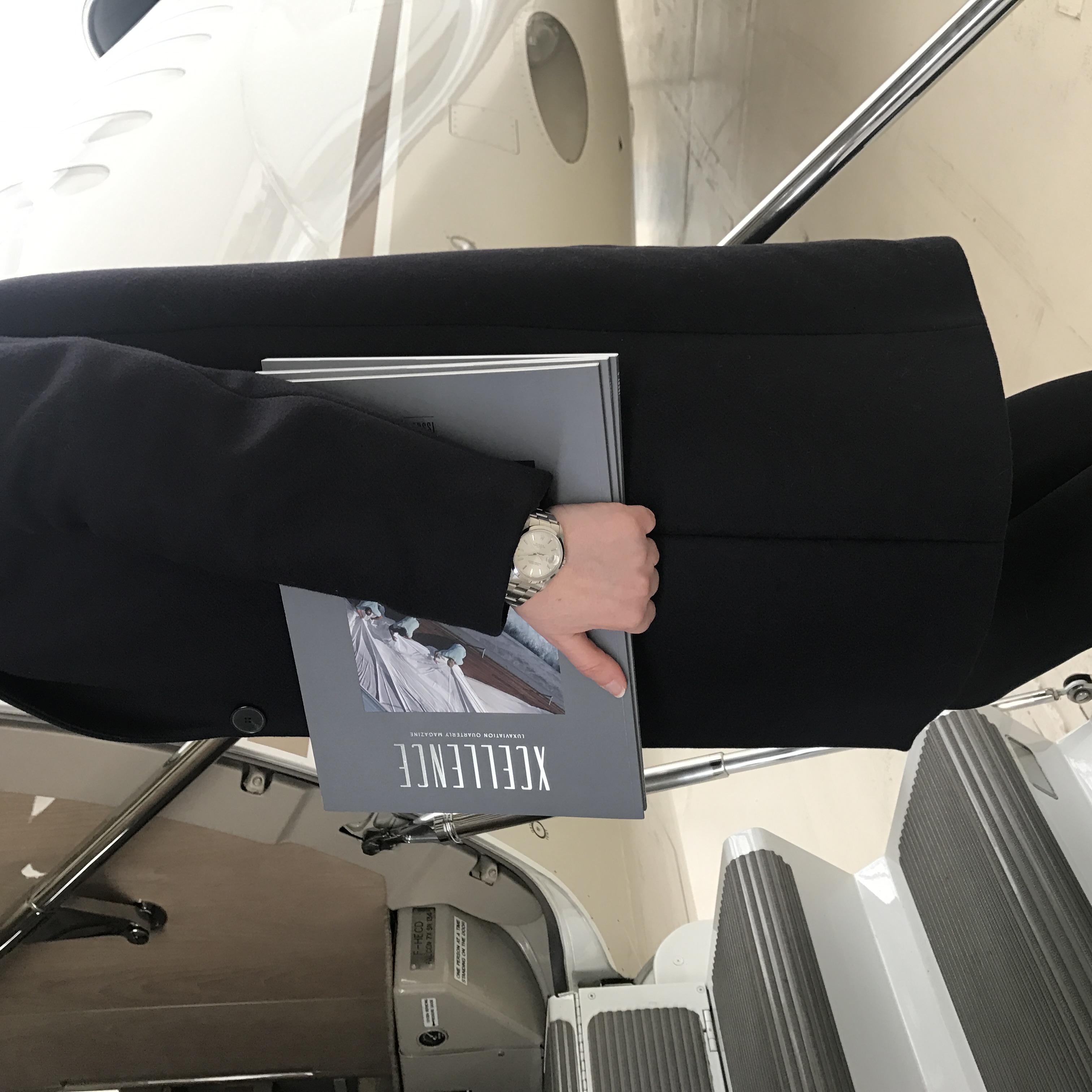
What Is a Print Marketing Asset?
A print marketing asset is any physically produced, branded material that a business uses to communicate its identity, build trust, and support its marketing or sales objectives [1]. It is tangible, distributable, and — when made well — something an audience chooses to keep rather than throw away.
Definition and Core Characteristics
The term “print marketing asset” covers a broad spectrum. At the functional end, you have items like business cards, brochures, flyers, and direct mail pieces. These are transactional tools: they convey information quickly and support a specific action [2]. They do their job and move on.
At the strategic end, you have publications: brand magazines, coffee-table books, annual reviews designed as editorial products. These aren’t built for a single transaction. They’re built to represent what a company stands for, in a format that earns a place on a shelf rather than a trip to the recycling bin.
According to the Redefine Alliance Workshop, marketing assets are “the print and digital pieces your business shares with your target audiences to educate them about your products and services” [3]. That’s a useful baseline. But the most effective print assets do more than educate. They build a feeling about the brand.
How Print Assets Differ From Digital Assets
Digital assets — websites, social posts, email campaigns — are fast, scalable, and measurable. Print assets are none of those things, and that’s precisely the point.
Print is slow on purpose. A magazine that took four months to produce and print carries a different weight than a post that took four minutes. That investment of time and craft is something readers can feel, even if they can’t articulate why. Research from the AMPP (Association for Materials Protection and Performance) confirms that print advertising continues to deliver strong recall and credibility among B2B audiences, particularly in technical and professional sectors [4].
One limitation worth acknowledging: print assets can’t be updated after production. What goes to press stays in press. That constraint demands more careful editorial thinking upfront — which, in practice, tends to produce better content.
Pro Tip: Before briefing any print asset, define whether it’s transactional (designed to prompt a specific action) or relational (designed to build brand perception over time). The answer changes everything: format, paper stock, distribution, and the depth of editorial investment required.
Types of Print Marketing Assets: From Collateral to Keepsakes
Print marketing assets range from everyday collateral like business cards to high-investment editorial publications — and each type serves a distinct role in a brand’s marketing strategy [5].
Everyday Print Collateral
Printed marketing collateral is the broad category of physical materials a business uses to support brand awareness and sales efforts [1]. These are the workhorses of print marketing:
- Business cards: The most immediate physical representation of a person and their brand. Still one of the highest-return print investments for first impressions [6].
- Brochures and flyers: Versatile formats for communicating services, events, or offers. Effective when the design is sharp and the copy is focused [7].
- Direct mail: Postcards, letters, and mailers sent to targeted lists. Direct mail response rates have remained consistently higher than email in several B2B verticals, according to industry data.
- Catalogs: Particularly effective for product-heavy businesses where the physical browsing experience drives purchase decisions [8].
- Posters and banners: Event and retail environments benefit from large-format print that commands attention in physical space [9].
- Branded stationery: Letterhead, envelopes, and notepads that signal professionalism at every touchpoint [6].
Premium Print Assets: Publications That Last
Above the collateral tier sits a different category entirely. These are print marketing assets designed not for a single interaction but for an extended relationship with the reader:
- Brand magazines: Fully editorial publications funded and owned by a company, with no advertising. Every page serves the brand’s story. When done properly, readers keep them for months.
- Coffee-table books: Design-led volumes that celebrate a brand’s world — its properties, projects, history, or values. Common in hospitality, real estate, architecture, and design.
- Annual reports as editorial products: Financial reporting reframed as a design-led narrative, positioned as a brand statement rather than a compliance document.
- Lookbooks and portfolio publications: Visual showcases for design, fashion, architecture, or real estate brands, where the quality of the printed object mirrors the quality of the work inside.
| Asset Type | Primary Purpose | Lifespan | Best For |
|---|---|---|---|
| Business card | First impression / contact | Indefinite (if kept) | All businesses |
| Brochure / flyer | Inform / prompt action | Days to weeks | Events, campaigns |
| Direct mail piece | Drive response | Days to weeks | Targeted outreach |
| Catalog | Browse and purchase | Weeks to months | Product businesses |
| Brand magazine | Build brand perception / loyalty | Months to years | Premium brands, B2B |
| Coffee-table book | Brand prestige / relationship | Years | Hospitality, real estate, design |
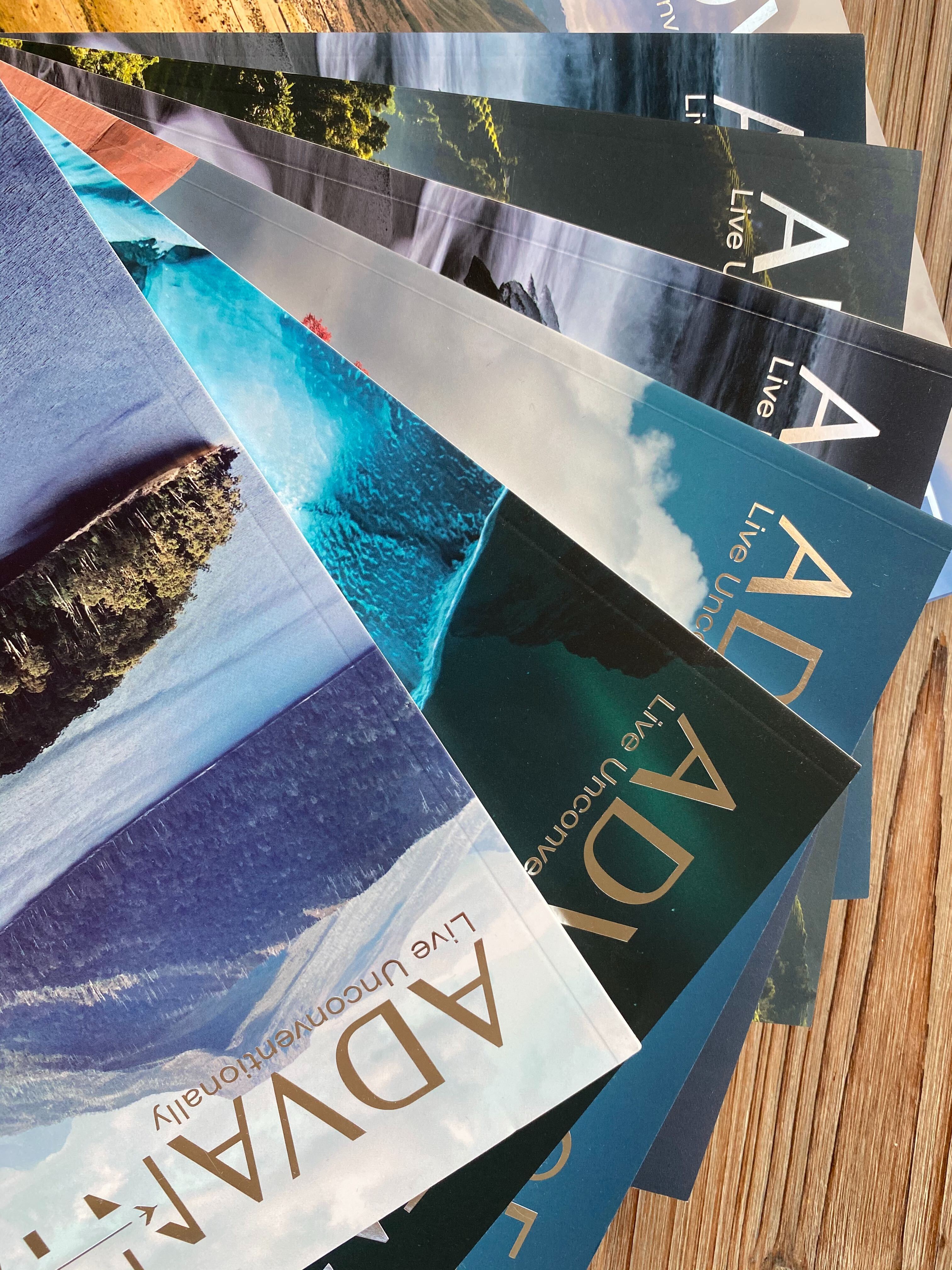
Why Print Marketing Assets Still Work in 2026
Print marketing assets remain effective in 2026 because physical objects command attention, build trust, and stay present in ways that digital content structurally cannot [4].
The Attention Economy Argument
Digital feeds are saturated. The average professional receives hundreds of emails and social impressions every day. Most are ignored. A physical object — especially a well-designed one — operates differently. It requires a different kind of engagement: you have to pick it up, hold it, turn pages. That physical engagement translates directly into better recall and stronger emotional association with the brand.
Industry analysts consistently note that print’s perceived scarcity is now a strategic advantage. When almost every brand has moved budget to digital, showing up in someone’s physical space is genuinely differentiating. According to Mimeo’s research on branded print materials, physical marketing pieces are “trusted, memorable, and built to last” in ways that digital equivalents struggle to replicate [10].
From experience working across hospitality, cybersecurity, law, and real estate, the pattern holds: the brands that invest in premium print assets are remembered differently. Not just as companies that sell something, but as companies that stand for something.
Print as a Long-Term Brand Investment
A digital ad campaign requires continuous spend to maintain visibility. Stop paying, and you disappear. A print marketing asset works differently. A magazine produced today will still be sitting on a client’s coffee table six months from now, carrying the brand into every room it occupies, without any additional cost per impression.
The global custom publishing market was valued at approximately $2.8 billion in 2023 and has continued to grow as premium brands reinvest in print precisely because digital saturation has eroded attention. That trend has accelerated through 2024 and 2026, particularly among B2B companies seeking to differentiate in markets where every competitor looks the same on a screen.
One real-world scenario illustrates this well. A professional services firm invested in a well-produced editorial magazine distributed to its top 200 clients. Months after distribution, several clients referenced specific articles during business conversations. No digital touchpoint had achieved that kind of sustained, organic engagement.
Pro Tip: Don’t measure a premium print marketing asset the way you’d measure a paid ad. The right metric isn’t click-through rate — it’s how long the piece stays in the room and how often it comes up in conversation. Ask clients directly. The answers are usually surprising.
Common Mistakes Brands Make With Print Assets
The most common mistake brands make with print assets is treating them as an afterthought — a brochure designed in a hurry, printed cheaply, and distributed without a strategy [11].
Confusing a Brochure With a Magazine
A brochure is a sales tool. A magazine is an editorial product. They require completely different thinking, different skills, and different investment levels. Brands frequently try to produce something that looks like a magazine but functions like a brochure — a product-heavy, self-promotional document dressed up with nice photography. Readers can tell the difference immediately.
A genuine brand magazine has an editorial spine (the guiding idea that connects every article, image, and design choice) and content that earns the reader’s time by being genuinely interesting, not just promotional. Without that spine, you have an expensive brochure.
A common mistake is assigning a magazine project to an internal marketing team without editorial publishing expertise. Design teams are skilled at visual assets. Editorial publishing requires a different discipline: story structure, pacing, image-text pairing, and the kind of judgment that comes from years of producing actual publications.
Underinvesting in Paper and Print Quality
The physical quality of a print asset communicates brand quality directly. A magazine printed on thin paper with weak color reproduction tells the reader something about the brand that no headline can undo. Paper weight, finish, binding method, and color accuracy (achieved through proper softproofing and print color profiles) are not details. They are the product.
- Choosing paper stock purely on cost rather than on the tactile and visual impression it creates
- Skipping print proofs to save time, then being surprised by color shifts on press
- Using screen-optimized images in print layouts without proper resolution and color profile conversion
- Neglecting bleed, margins, and preflight checks, leading to costly reprints
- Distributing a premium publication in a way that damages it before it reaches the reader
Regis University’s print and digital asset policy notes that all marketing materials must be “professional, accurate in terms of message and statistics” — a standard that applies equally to the visual and physical quality of what gets produced [11].
Best Practices for Print Marketing Assets in 2026
The most effective the practices in 2026 are built around a clear strategic purpose, produced with editorial and design discipline, and distributed with the same intentionality that went into making them [5].
Start With Editorial Strategy, Not Design
Most brands start a print project by asking “what should it look like?” The better question is “what should it say, and why will someone want to read it?” Design serves editorial. Not the other way around.
A strong print publication process follows this sequence:
- Define the editorial spine: What does this publication stand for? What thread connects every article, image, and layout choice?
- Build a content proposal and flatplan: Map every article and visual element before a word is written or a layout is started.
- Commission writing and visuals with intention: Every interview, photograph, and illustration should serve the editorial idea, not just fill pages.
- Design with the reader in mind: Strong spreads, considered typography, and image-text pairings that reward the reader for slowing down.
- Proof rigorously: Multiple rounds of copy editing, fact-checking, and design review before anything goes to pre-press.
- Handle pre-press with precision: Proper color profiles, softproofing, preflight checks, and print proofs before the full run.
- Distribute strategically: A premium publication deserves a distribution plan that gets it into the right hands, not just the most hands.
Match the Asset Type to the Strategic Goal
Not every marketing objective calls for a magazine. The choice of print asset should follow directly from what the brand is trying to achieve:
- Building long-term brand perception with key clients: Brand magazine or coffee-table book
- Supporting a property or project launch: Coffee-table book or editorial lookbook
- Nurturing existing client relationships: Recurring brand magazine, quarterly or biannually
- Driving event attendance or campaign response: Direct mail, poster, or invitation suite
- Establishing authority in a professional sector: Thought-leadership magazine with original research and expert interviews
At Rethink Publishing, we’ve found that the brands who get the most from a print investment are those who are clear about one thing: they want to be remembered, not just seen. That distinction drives every editorial and design decision that follows.
Pro Tip: Distribute your premium print asset in person where possible — at client meetings, events, or as part of a new relationship welcome. The moment of handing over a beautifully made publication is itself a brand experience. It says more about your company in three seconds than most digital touchpoints manage in months.
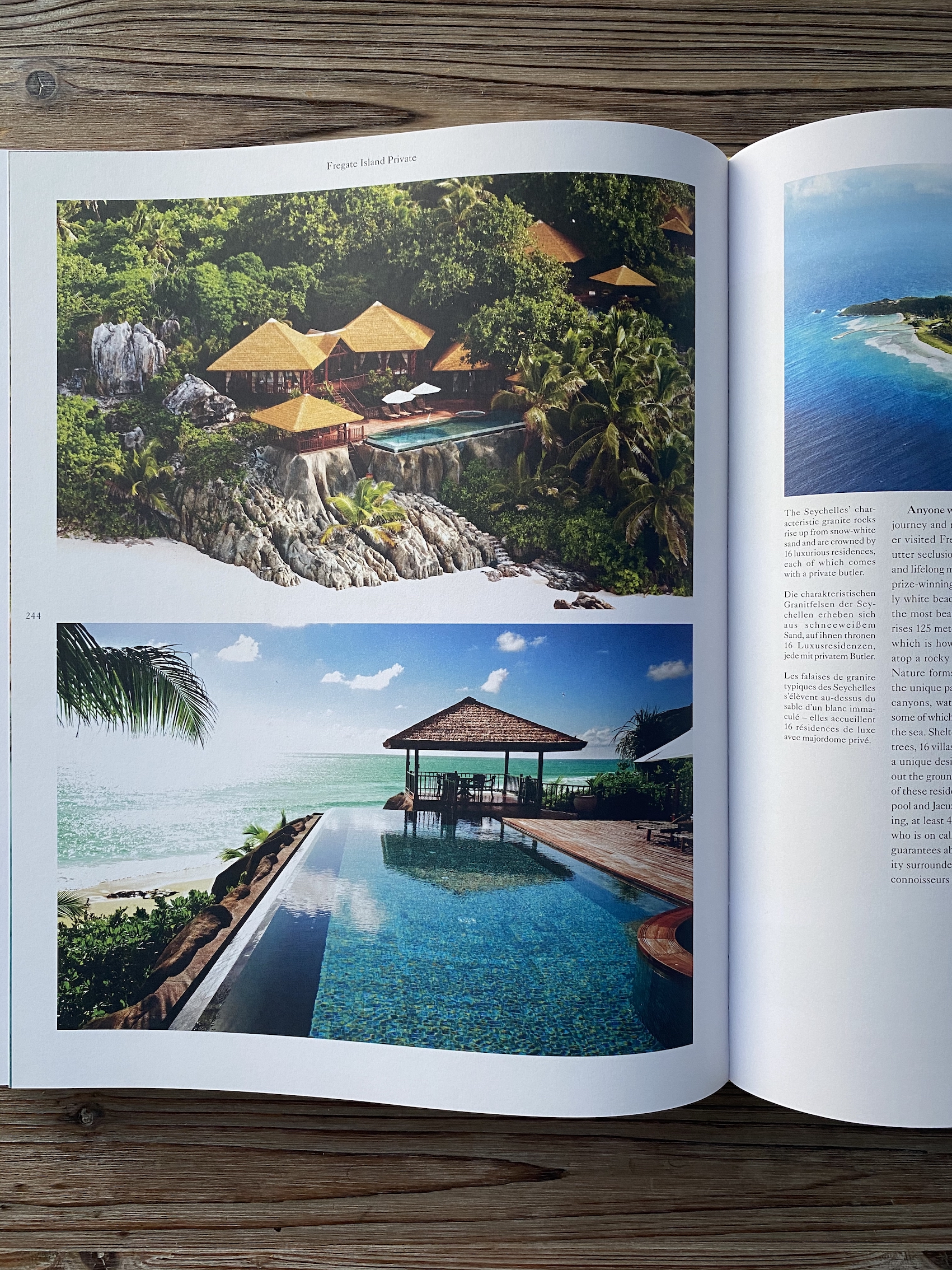
Sources & References
- Mailpro, “What is Print Collateral? Types, Examples & ROI (2026 Guide)”, 2026
- PrintingCenterUSA, “The 5 Best Print Marketing Materials in 2026”, 2026
- Redefine Alliance Workshop, “Marketing Assets Overview”, 2026
- AMPP, “4 Reasons Why Print Advertising Still Makes Sense for Your Business”, 2026
- Impact Group Marketing, “5 Business Printing Assets You Need for Your Business”, 2026
- Impact Group Marketing, “Business Cards: Your First Impression”, 2026
- PrintTime, “Common Print Assets to Make Your Company Stand Out”, 2026
- Indeed, “17 Types of Print Marketing Materials and How To Use Them”, 2026
- Mimaki USA, “Top 7 Printed Marketing Materials to Help Build Your Business”, 2026
- Mimeo, “Branded Print Material That Elevates Your Marketing Strategy”, 2026
- Regis University, “Print and Digital Asset Policy”, 2026
Frequently Asked Questions
1. What are the four main types of marketing assets?
The four main categories of marketing assets are print assets (magazines, brochures, direct mail, coffee-table books), digital assets (websites, email, social content, video), experiential assets (events, activations, showrooms), and brand identity assets (logos, typography systems, photography libraries). Each category serves a different role in the marketing mix, and the most effective brand strategies use print and digital assets together rather than treating them as competing channels.
2. What is printed marketing collateral?
Printed marketing collateral refers to the full range of physical materials a business produces to support brand awareness, communicate its offering, and assist with client relationships and sales. This includes everyday items like business cards, brochures, flyers, and direct mail, as well as premium publications like brand magazines and coffee-table books. The key distinction is that collateral describes functional print tools, while a brand magazine or book is a strategic editorial asset designed for long-term brand building rather than a single transaction.
3. What makes a brand magazine different from a brochure?
A brochure is designed to communicate specific information and prompt a response — it’s transactional. A brand magazine is an editorial product built around a clear editorial spine: a guiding idea that connects every article, image, and design choice into a coherent reading experience. Magazines earn the reader’s time by being genuinely interesting, not just promotional. That’s why people keep them. A brochure does its job and gets discarded. A great magazine stays in a home or office for months, keeping the brand present without any additional cost.
4. Which industries benefit most from premium print marketing assets?
Any industry where trust, relationships, and brand perception drive purchasing decisions benefits from premium print. This includes hospitality, luxury real estate, architecture and design, private members’ clubs, law firms, financial services, and — perhaps surprisingly — B2B sectors like cybersecurity and technology. In these industries, a beautifully produced this practice communicates competence and confidence in a way that a digital touchpoint simply can’t replicate. The physical quality of the publication transfers directly to how clients perceive the brand behind it.
5. How long does it take to produce a high-end brand magazine?
A properly produced high-end brand magazine typically takes around 17 weeks from initial strategy to delivery. That timeline covers editorial strategy and content planning, writing and research, image sourcing and rights clearance, design and layout across multiple review rounds, copy editing and fact-checking, pre-press preparation, print production, and shipping. Cutting that timeline typically means cutting corners — and in premium print, corners show. Results and timelines may vary depending on scope, complexity, and the number of review cycles required.
6. Is print marketing worth the investment in 2026?
For brands focused on long-term perception, client loyalty, and differentiation, a premium this method is one of the highest-return investments available. It doesn’t require ongoing spend to maintain visibility, it can’t be ignored the way a digital ad can, and it signals brand confidence in a way that digital channels structurally cannot. That said, print is not right for every goal. If the objective is fast lead generation or quick conversions, there are faster tools. But if the goal is to be remembered — and to stay present in clients’ lives long after the first meeting — print delivers something no other format can.
Conclusion
A this strategy is more than a physical version of digital content. The best ones are designed to be kept, shared, and returned to. They carry a brand’s identity into rooms and conversations that no algorithm can reach.
The spectrum runs from practical collateral — business cards, brochures, direct mail — to fully editorial publications that function as long-term brand artifacts. Each type has its place. But the brands that invest in the highest tier of print, the ones that commission a magazine or coffee-table book with genuine editorial ambition, tend to be the ones remembered most clearly by their clients.
Print isn’t a nostalgic choice. As of 2026, it’s a deliberate one. In a world where every brand is fighting for attention on the same screens, showing up physically — with something beautiful, considered, and worth keeping — is one of the clearest signals of brand confidence available.
At Rethink Publishing, we’ve spent over 20 years producing 80+ high-end magazines and 30+ coffee-table books for companies who understand that distinction. The work starts with an editorial spine and ends with something a client displays rather than discards. If that’s the kind of this approach your brand deserves, the conversation starts at rethink-publishing.com.
Recommended Articles
Explore more from our content library: