
| Key Insight | Explanation |
|---|---|
| Print outlasts digital attention | A well-made print magazine stays in a home or office for months. A digital post disappears within 48 hours and is rarely revisited. |
| Physical reading drives deeper retention | Research consistently shows that readers retain information better from print than from screens, due to reduced cognitive load and fewer distractions. |
| Editorial quality determines whether print gets kept | A beautifully designed, editorially curated magazine earns a place on a coffee table. A corporate brochure goes straight to recycling. |
| Print is a long-term brand investment | Unlike paid digital ads that stop working the moment the budget stops, a print magazine continues to represent your brand for as long as it exists in someone’s space. |
| Audience retention benchmarks differ by medium | Digital video retention rates of 50-70% are considered strong. Print, measured differently, achieves pass-along rates and extended dwell times that digital cannot replicate. |
| The brand owns every page | A custom brand magazine carries no competing ads, no algorithm interference, and no platform risk. The story is entirely yours. |
Understanding audience retention print materials is essential. Audience retention in print materials refers to how long, how deeply, and how repeatedly a reader engages with a physical publication. Unlike digital content, where retention is measured in seconds and click-through rates, print retention is measured in dwell time, pass-along readership, and whether a publication is kept or discarded. It matters because a brand magazine that stays on a coffee table for six months is still working for your brand every single day it sits there.
Most marketing conversations about audience retention focus entirely on video and digital. That’s a mistake. The research on print readership tells a different story, and it’s one that brand leaders increasingly need to hear. A 2019 study published in Journalism Practice examined what happened to the readership of the UK’s New Musical Express after it moved from print to digital-only. The findings were stark: the publication lost a significant share of its deeply engaged audience, the kind that reads in full rather than skims [1]. This is particularly relevant for audience retention print materials.
This article covers what audience retention in print materials actually means, why print consistently outperforms digital for deep engagement, how editorial craft determines whether a publication gets kept or thrown away, and what brands can do to maximize the retention value of every issue they produce.

What Is Audience Retention in Print Materials?: audience retention print materials
Audience retention in print materials is the measure of how fully, how long, and how often a reader engages with a physical publication, including whether they keep it, share it, or return to it over time.
The term “audience retention” originates in broadcast and video analytics. Platforms like YouTube define it as the percentage of a video that viewers watch before leaving [2]. In that context, a 50% retention rate means half your audience watched to the midpoint and left. For a 10-minute video, that’s five minutes of attention. For a 30-minute video, it’s 15 minutes.
Print works differently. There’s no timestamp, no drop-off curve. But that doesn’t mean retention is unmeasurable or unimportant. In print, audience retention is assessed through: When considering audience retention print materials, this point stands out.
- Dwell time: how many minutes a reader spends with a single issue
- Read-through rate: the proportion of the publication a reader actually engages with, not just flips past
- Pass-along readership: how many additional people read the same copy, a metric that can multiply a print run’s effective audience by a factor of three to five
- Retention period: how long a publication stays in a home, office, or waiting room before being discarded
- Recall rate: how well readers remember content, brand messages, and specific articles after reading
Why the Definition Matters for Brand Publishers
If you’re producing a brand magazine and measuring its success purely by distribution numbers, you’re missing the point. A thousand copies sent out means very little if the publication is glanced at and binned. The real question is: how many of those copies are being read properly, kept, and shared?
This is where editorial quality becomes the decisive variable. A beautifully designed, substantive magazine earns extended engagement. A corporate brochure dressed up as a magazine does not. The difference is felt in the first thirty seconds of handling it, which is why the editorial spine, the paper stock, the photography, and the layout all contribute directly to retention outcomes.
According to the American Press Institute, subscriber retention for print publications is closely tied to perceived value. Readers who feel a publication is worth their time renew, keep issues, and recommend [3]. The same principle applies to brand-funded magazines. If the content earns attention, the publication earns a place in the reader’s world.
Why Print Outperforms Digital for Audience Retention
Print materials consistently achieve deeper, longer-lasting audience engagement than digital equivalents because physical reading reduces cognitive distraction, encourages linear consumption, and creates a tangible object the reader can return to. For those exploring audience retention print materials, this matters.
The research here is consistent across multiple studies. Readers process information more thoroughly on paper than on screen. Comprehension is higher. Recall is stronger. And crucially, the absence of competing notifications, hyperlinks, and autoplay content means a print reader’s attention is genuinely undivided in a way that digital simply cannot replicate.
The Attention Economy Problem Digital Can’t Solve
Digital content operates in what researchers call an “attention economy,” where every platform competes simultaneously for the same eyeballs. A social post has seconds to make an impression before the scroll continues. An email newsletter competes with dozens of others in an inbox. Even a well-produced digital article faces constant interruption from browser tabs, push notifications, and the general ambient noise of being online.
Print sidesteps all of that. When someone picks up a magazine, they’ve made a deliberate choice to read. That choice itself signals a higher level of engagement before a single word is processed.
The INMA (International News Media Association) has noted that despite the dominant shift toward digital formats, print publications retain a distinct advantage in depth of reader engagement, particularly for long-form content [4]. This isn’t nostalgia. It’s a measurable behavioral difference. This directly impacts audience retention print materials outcomes.
Pass-Along Readership and Extended Brand Exposure
One of print’s most underappreciated retention advantages is pass-along readership. A single copy of a well-produced magazine doesn’t just reach one person. It reaches everyone who picks it up from the reception desk, the coffee table, the waiting room, or the office shelf.
Industry estimates for premium print publications suggest pass-along rates of three to five additional readers per copy. For a brand magazine distributed to 2,000 clients, that’s a potential reach of 6,000 to 10,000 engaged readers from a single print run, without any additional spend.
Compare that to a digital ad, which stops reaching anyone the moment the budget runs out. Print keeps working. The audience retention print materials achieve over time is cumulative in a way that digital impressions are not.

How Editorial Quality Drives Audience Retention in Print Materials
Editorial quality is the single most important factor determining whether a print publication retains its audience. A strong editorial spine, intentional design, and substantive content transform a magazine from something a reader flips through into something they keep.
This is where the distinction between a brand magazine and a corporate brochure becomes critical. A brochure is built around what the company wants to say. A magazine is built around what the reader wants to read. That shift in orientation changes everything: the topics chosen, the depth of reporting, the quality of photography, the pacing of the layout. This is particularly relevant for audience retention print materials.
The Role of the Editorial Spine
An editorial spine (the governing theme or point of view that runs through an entire issue) is what gives a magazine coherence. Without it, a publication feels like a collection of disconnected articles. With it, every piece reinforces a central idea, and the reader finishes the issue feeling like they’ve absorbed something meaningful.
In practice, this means defining the editorial idea before a single word is written or a single image sourced. What does this issue stand for? What conversation is it entering? What will readers take away that they didn’t have before?
At Rethink Publishing, we’ve found that the publications with the highest reader engagement are invariably the ones where the editorial spine was established clearly at the outset. The design, the photography, the feature selection, and even the paper stock all flow from that central idea. When those elements align, readers feel it. They don’t always articulate it, but they keep the magazine.
Design, Typography, and Physical Craft
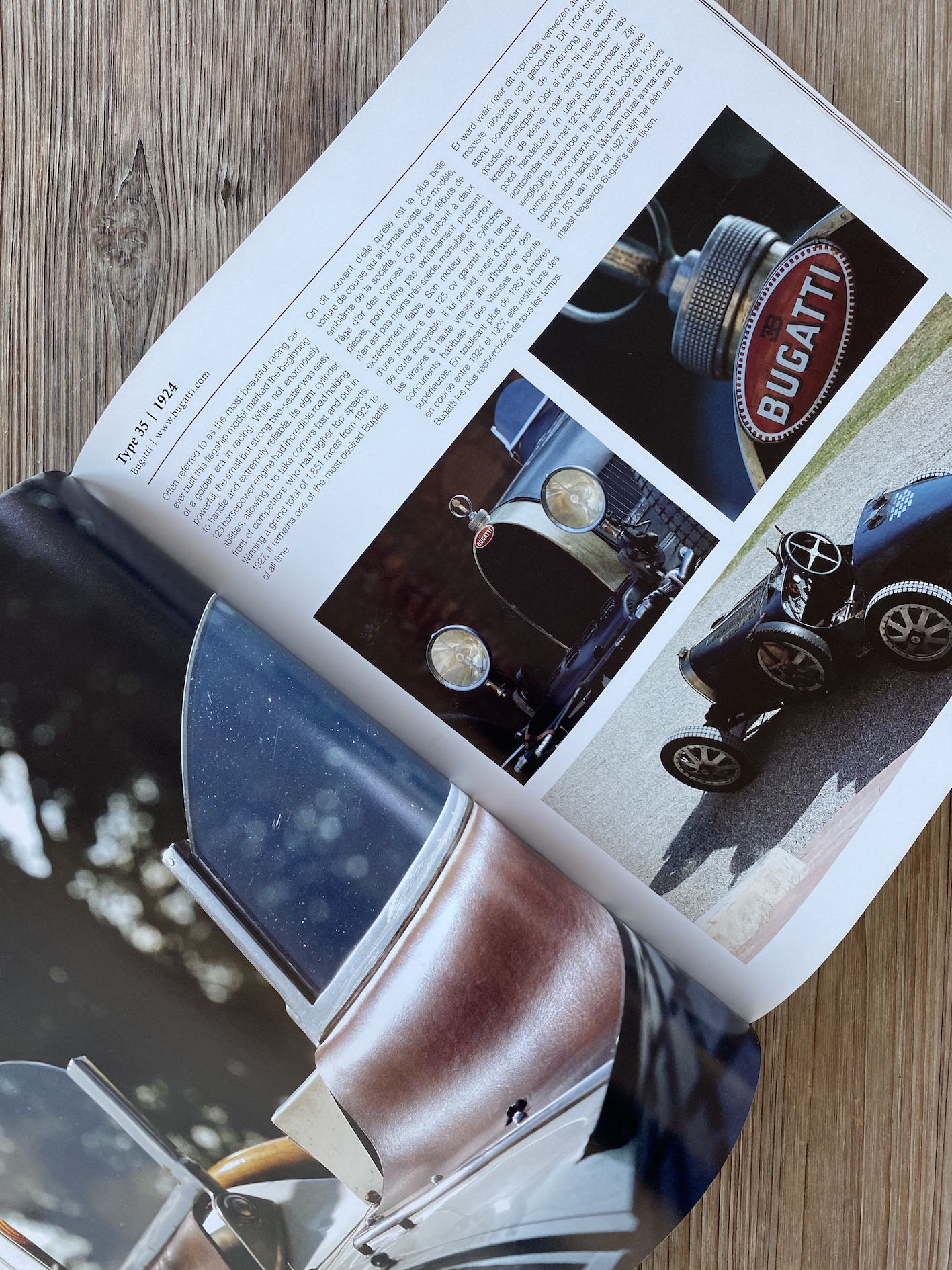
Audience retention in print materials is also a tactile experience. The weight of the paper, the quality of the binding, the precision of the color reproduction — these are not cosmetic details. They communicate something about the brand before the reader has processed a single word. When considering audience retention print materials, this point stands out.
A publication printed on flimsy stock with compressed images signals that the brand didn’t care enough to do it properly. A publication printed on considered paper with properly color-managed images signals the opposite. That signal is absorbed immediately and subconsciously, and it shapes how deeply the reader engages with everything that follows.
Research published via the ACM Digital Library on measuring audience engagement in media confirms that perceived production quality directly influences how long and how deeply an audience engages with content [5]. In print, that quality is literal and physical, not metaphorical.
Measuring Audience Retention Across Print and Digital
Measuring audience retention differs fundamentally between print and digital media. Digital offers granular, real-time data. Print relies on readership surveys, distribution tracking, and qualitative feedback, but the engagement it captures is often deeper and more durable.
Understanding how these two measurement approaches compare helps brand leaders make informed decisions about where to invest and how to evaluate the return on a print magazine. For those exploring audience retention print materials, this matters.
Digital Retention Metrics vs. Print Retention Metrics
| Metric | Digital (Video/Web) | Print Magazine |
|---|---|---|
| Primary retention measure | % of content consumed before exit | Dwell time, read-through rate, retention period |
| Average engagement window | Seconds to minutes | 20-45 minutes per sitting; months of physical presence |
| Pass-along potential | Shares and reposts (low average) | 3-5x additional readers per physical copy |
| Information recall | Lower; disrupted by notifications | Higher; undivided attention, tactile encoding |
| Measurement tools | Analytics platforms, real-time dashboards | Reader surveys, distribution data, qualitative feedback |
| Longevity of exposure | Content disappears from feeds within hours | Physical copy remains visible for months or years |
| “Good” benchmark | 50-70% for short-form video [6] | Retention period of 3+ months; pass-along of 3+ readers |
What “Good” Retention Looks Like in Practice
For digital video, research from YouTube analytics studies suggests that a 50% average view duration is a reasonable benchmark for content over five minutes [7]. Shorter content performs better on a percentage basis simply because the time commitment is lower.
For print, the benchmarks are different and in many ways more meaningful. A brand magazine that a client keeps for six months, picks up multiple times, and mentions to a colleague has achieved a level of retention that no digital metric can capture. That kind of engagement doesn’t show up in a dashboard, but it shows up in relationships, in referrals, and in the quality of conversations your brand is part of.
The post-print audience research published in Journalism Practice found that when the NME moved from print to digital-only, the deep, habitual readership that had sustained the brand for decades did not migrate online [8]. The audience that remained was larger in raw numbers but shallower in engagement. That’s a cautionary finding for any brand considering whether print is worth the investment.
Best Practices for Print Audience Retention in 2026
The brands achieving the strongest audience retention from print materials in 2026 share a common approach: they treat their magazine as an editorial product, not a marketing deliverable, and they invest in every element of the physical experience. This directly impacts audience retention print materials outcomes.
As of 2026, print is experiencing a measurable resurgence among premium brands precisely because digital saturation has made physical media scarce and therefore valuable. The brands getting the most from print right now are the ones that understand this shift and act on it with genuine craft.
Build the Editorial Spine Before Anything Else
The most common mistake brands make is starting with design. They hire someone to make it look beautiful before they’ve decided what it should say or why anyone would want to read it. That’s backwards.
Start with the editorial idea. Define the theme, the point of view, the reader you’re serving, and the story you want to tell across the issue. Everything else, from feature selection to photography to layout, flows from that foundation.
Pro Tip: Before commissioning a single article or image, write a one-paragraph brief that describes what a reader should think, feel, and remember after finishing your magazine. If you can’t write that brief clearly, the editorial spine isn’t defined yet. Don’t proceed until it is.
Invest in the Physical Experience
Audience retention in print materials is directly influenced by the quality of the physical object. These are the elements that determine whether a publication gets kept or discarded: This is particularly relevant for audience retention print materials.
- Paper stock: Weight, texture, and finish communicate quality before a word is read. A heavier, uncoated stock often signals premium intent better than a glossy, lightweight alternative.
- Binding: Perfect bound (glued spine) or saddle-stitched (stapled) for thinner issues. Both work; the choice depends on page count and the tactile experience you want to create.
- Color management: Proper softproofing and print color profiles ensure that the photography looks as intended on press. Flat, washed-out images undermine everything else.
- Cover design: The cover is the first retention decision a reader makes. A strong, considered cover earns a second look and a longer hold.
- Finishing details: Spot UV, embossing, or foil on the cover are not indulgences. They are tactile signals that tell the reader this was made with care.
Pro Tip: Request a physical print proof before approving the full run. Color on screen and color on press are not the same thing. What looks vibrant on a monitor can appear flat or oversaturated in print without proper color profiling. This step is non-negotiable for a premium publication.
Distribute with Intention
A beautifully produced magazine sent to the wrong people is wasted. Audience retention in print materials starts with getting the right publication into the right hands.
- Distribute to existing clients, not just prospects. The people who already trust your brand are the most likely to keep and share a well-made publication.
- Place copies in high-dwell environments: reception areas, waiting rooms, private club lounges, hotel suites. These are spaces where people have time and are predisposed to read.
- Consider a curated mailing list over a mass distribution. A smaller, more targeted print run reaching genuinely relevant people outperforms a larger run sent indiscriminately.
- Follow up with recipients. A brief personal note accompanying a magazine, or a conversation that references it, reinforces the connection and signals that the publication was sent with purpose.
Pro Tip: Track qualitative feedback actively. Ask clients whether they received the magazine, what they read, and what they remembered. This kind of direct feedback is more valuable for a brand publication than any analytics dashboard, and it often surfaces insights that reshape the next issue.
Common Mistakes That Kill Print Retention
Most brand magazines fail to retain their audience not because print doesn’t work, but because they were produced without genuine editorial discipline or physical craft.
In practice, the same mistakes appear repeatedly across industries. Recognizing them early is the difference between a publication that earns a place on a client’s shelf and one that goes straight to recycling.
Treating the Magazine as a Brochure
A brochure is a sales tool. A magazine is an editorial product. The moment a brand magazine starts reading like a product catalog, dressed up with better photography, it has lost its audience retention value. When considering audience retention print materials, this point stands out.
Readers can tell immediately when a publication is fundamentally about the company rather than about them. The content feels self-congratulatory. The articles are thinly disguised case studies. The photography is all staged corporate imagery. Nobody keeps that.
A magazine earns retention by serving the reader’s curiosity, interests, and sense of identity. The brand is present throughout, but as a host and a point of view, not as a salesperson.
Underinvesting in Photography and Design
Images are the first thing a reader processes. Before a headline is read or a caption is noticed, the quality of the photography has already communicated something about the brand. Underinvesting here is one of the most common and most damaging mistakes.
Generic stock photography is immediately recognizable and immediately deflating. Readers have seen those images before, in a dozen other contexts, and they communicate the opposite of originality and care. For those exploring audience retention print materials, this matters.
Commissioned photography, properly retouched and color-managed for print, is a different experience entirely. It signals exclusivity, craft, and genuine investment. Those signals are absorbed subconsciously and they drive the decision to keep or discard a publication.
Skipping the Proofing Process
Multiple proofing rounds are not bureaucratic overhead. They are the mechanism by which errors, inconsistencies, and quality issues are caught before they become permanent. A factual error in a printed magazine cannot be corrected with a quick edit. It exists in every copy, for as long as those copies exist.
The American Press Institute’s research on subscriber retention strategies emphasizes that perceived accuracy and reliability are among the strongest drivers of long-term reader loyalty [3]. In print, accuracy is a physical commitment.
Sources and References
- Journalism Practice, “Effects of a Magazine’s Move to Online-only: Post-print Audience Attention and Readership Retention Revisited,” 2019
- Storykit, “What is audience retention and why is it important?”, 2024
- American Press Institute, “9 subscriber retention strategies,” 2023
- INMA, “Despite move toward digital formats, the power of print endures,” 2023
- ACM Digital Library, “Measuring Audience Retention in YouTube,” 2019
- Humble and Brag, “YouTube Audience Retention Benchmarks 2026: What’s Good?”, 2026
- HAL-Inria, “Measuring Audience Retention in YouTube” (PDF), 2019
- City, University of London Open Access, “Post-print Audience Attention and Readership Retention Revisited” (PDF), 2019

Frequently Asked Questions
1. Is 24% retention good?
For digital video, 24% retention is below average and suggests the content isn’t holding its audience. As a benchmark, videos between 15 and 30 minutes typically achieve 30-45% retention when the content is well-structured and the opening is strong. A 24% rate usually signals a weak hook, pacing issues, or a mismatch between the title’s promise and the content’s delivery. For shorter videos under five minutes, 24% is a significant underperformance. That said, context matters: niche, highly technical content may see lower percentages while still reaching a genuinely engaged audience.
2. Is 96% audience retention good?
Yes, 96% audience retention is exceptional by any measure. For digital video, it means nearly every viewer watched the content in full, which signals extremely high relevance, strong production quality, and an audience that was precisely targeted. As a general benchmark, 60-70% is considered strong for short-form video, and 50% is the floor for acceptable performance on longer content. A 96% rate is rare and typically indicates either a very short video, a highly specific audience with strong intent, or genuinely outstanding content. For brand publishers, this kind of engagement is what a well-produced print magazine can achieve: readers who are there by choice, consuming content they actually want.
3. Is an 80% retention rate good?
An 80% retention rate is strong in most contexts, though what “good” means depends entirely on the medium and the metric being measured. For customer retention in business, 80% is well above the general benchmark of 35-84% across industries, and in premium service sectors it signals genuine loyalty. For digital video, 80% average view duration is excellent and well above typical benchmarks. For print, audience retention print materials achieve is measured differently: an 80% read-through rate on a brand magazine would indicate that most readers are engaging with the majority of the content, which is a strong result for any publication. The key is always to benchmark against your own previous performance, not just industry averages.
4. What makes a brand magazine worth keeping?
A brand magazine earns its place on a reader’s shelf when it offers genuine editorial value: content that informs, inspires, or entertains rather than simply promoting the brand. Physical quality matters equally. A well-chosen paper stock, strong photography, and considered design all signal that the publication was made with care, and readers respond to that signal by keeping it. The combination of editorial substance and physical craft is what separates a publication that gets kept for months from one that gets recycled within a week.
5. How does print audience retention compare to digital content retention?
Print and digital retention operate on different timescales and through different mechanisms. Digital content retention is measured in seconds and minutes, and the average piece of content is forgotten within 24 hours. Print retention is measured in weeks, months, and sometimes years. A single issue of a well-produced brand magazine can remain physically present in a client’s home or office for six months or more, representing continuous passive brand exposure without additional spend. Research on post-print readership confirms that the deeply engaged audiences built by print publications do not simply migrate to digital when a title moves online, suggesting that the medium itself is part of what drives deep retention [8].
6. How many issues does a brand magazine need before it builds real audience retention?
Audience retention in print materials builds over multiple issues. A single issue can make a strong impression, but habitual readership, the kind where clients actively look forward to the next issue, typically develops after two to three consistent, high-quality publications. Consistency in editorial quality, frequency, and physical standard is what builds that expectation. Brands that produce one outstanding issue and then go quiet for 18 months lose the momentum they’ve built. The publications that achieve the deepest retention are the ones readers can rely on to arrive, to be worth their time, and to represent the brand at its best.
Why Print Retention Is a Brand Strategy, Not a Nostalgia Play
Audience retention in print materials isn’t a sentimental argument for an older medium. It’s a strategic argument for the only marketing format that earns undivided attention, stays in someone’s physical space for months, and can’t be scrolled past, muted, or blocked.
The brands investing in high-quality print magazines in 2026 aren’t doing it because they miss the past. They’re doing it because they’ve noticed what digital saturation has done to their competitors’ marketing, and they want something that stands apart. A beautifully produced magazine, built on a clear editorial spine, distributed to the right people, and made with genuine craft, does something no digital campaign can. It stays.
That’s the case for audience retention print materials, stated plainly. If your brand cares about how it’s perceived, and you’re prepared to invest in something with real weight and real longevity, a print magazine is worth serious consideration. If you want quick conversions, there are faster tools. But if you want your brand to be remembered, kept, and talked about, print is still the most powerful option available.
Rethink Publishing has spent over 20 years producing high-end brand magazines and coffee-table books for companies across hospitality, real estate, architecture, law, and enterprise technology. Every publication we produce is managed end to end, from editorial strategy and writing through design, print production, and delivery. The result is a publication your clients will keep, not a brochure with a better cover. To explore what a magazine could do for your brand, visit rethink-publishing.com.
Recommended Articles
Explore more from our content library: